
Adobe Brand Concierge is Not Your Typical Chatbot
If you tried implementing a chatbot on your site before 2022, you probably remember how it went. It helped answer a few questions from its internal script, but fell apart when a customer asked something a little off-path. That probably happened more often than not, and eventually someone on your team just turned it off. But now AI has changed what a chat window can do. Adobe says its new one isn't an ordinary chatbot at all. Let's check.
Adobe Brand Concierge is Adobe's conversational AI tool that lets merchants run their own AI shopping assistant on their storefront. It only uses brand-approved content for answers, and for Adobe Commerce merchants, it connects to live catalog, pricing, and inventory. It became available to everyone on November 11, 2025, and it runs on Adobe Experience Platform Agent Orchestrator.
Adobe's timing is hard to argue with. Adobe Digital Insights reports that AI-driven traffic to retail sites jumped 138 percent year over year in May 2026, and those visitors convert at a rate 54 percent higher than everyone else. People are showing up from ChatGPT and Gemini ready to buy, yet most of them land on your site's search box. Brand Concierge is Adobe's answer to that gap, an AI agent you own.
This is also part three of our agentic commerce series. In part two, we covered selling inside other people's AI agents through protocols like UCP and ACP. That's one half of agentic commerce. Brand Concierge is the other half.
How Adobe Brand Concierge works
Brand Concierge turns a storefront's search box into a better, informative conversation. Instead of typing keywords and wrestling with filter menus, a shopper explains what they need in simple words and the agent guides them to it, asking questions along the way like a good store associate would.
Picture it on a retail site. The shopper types, "I need a small green casual dress for a summer wedding." Then, they see three options that match. And it isn't limited to products. A studio running classes can handle "is there a yoga class Thursday at 3pm?" in the same conversation, checking real availability instead of sending the customer to dig through a schedule page.
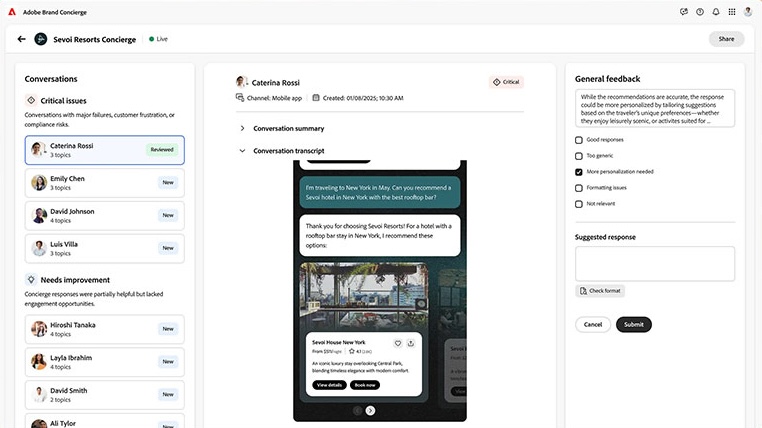
Three inputs make that work. The first is content, what Adobe calls the Brand Concierge Knowledge Base, the store of approved pages, guides, and FAQs (up to 25,000 URLs) the agent is allowed to answer from. If it doesn't know something, it says so instead of guessing (just because there are so many worries of AI hallucinations these days). The second is your product catalog, so recommendations come from what you actually sell. The third is the customer profile in Adobe Experience Platform. That last one is what separates this from a widget. A returning shopper asking about running shoes doesn't start from zero. The agent already knows they bought trail runners last spring and sized up a half size, so its first answer starts where a good associate would start.
Adobe has created a direct integration for Adobe Commerce merchants. This integration connects conversations to live commerce data, real catalogs, actual pricing, and current inventory. We'll get to exactly what's shipping and what's still coming, because the answer has more nuance than most coverage admits.
If you read part one of this series in January, you'll recognize this product. It's the idea we sketched back then. Brands need their own agents, shipped as software you can license today.
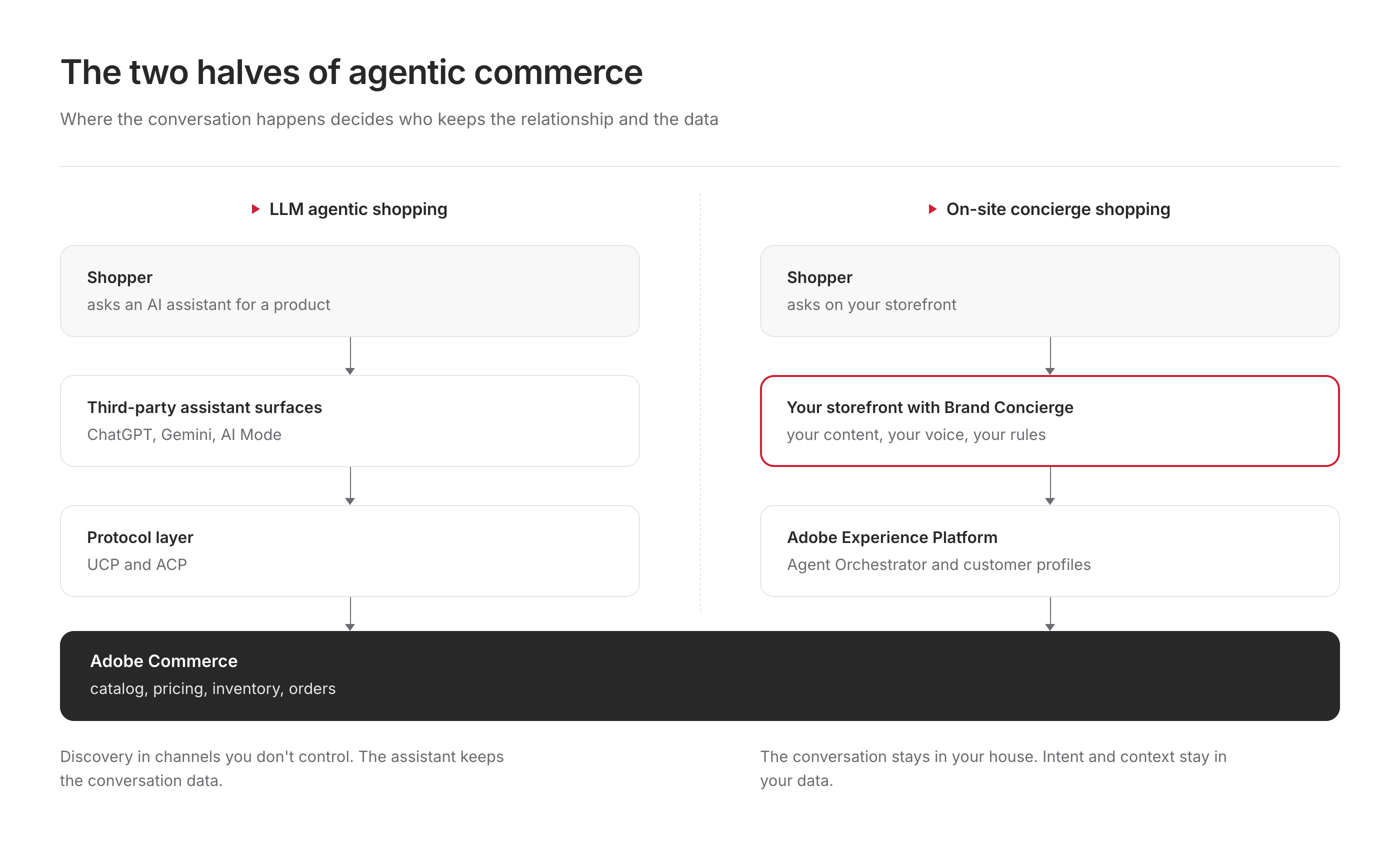
The two halves solve different problems. UCP and ACP get your products found in Gemini and ChatGPT. Brand Concierge is your own agent on your storefront, where you fully own the conversation. Most merchants will eventually want both, but only one hands you the conversational data.
Why Brand Concierge is not your typical ecommerce chatbot
The older bots failed in familiar ways. Scripted decision trees that collapsed the moment a customer asked a real question, with no connection to your product data and nowhere useful to escalate.
The newer worry is the opposite one. Old bots failed by not understanding. The concern now is a model that understands fine, sounds confident, and invents a return policy you don't have or a spec the product doesn't meet. That answer carries your logo, and the customer has no reason to doubt it.
Brand Concierge is built differently in three ways that matter.
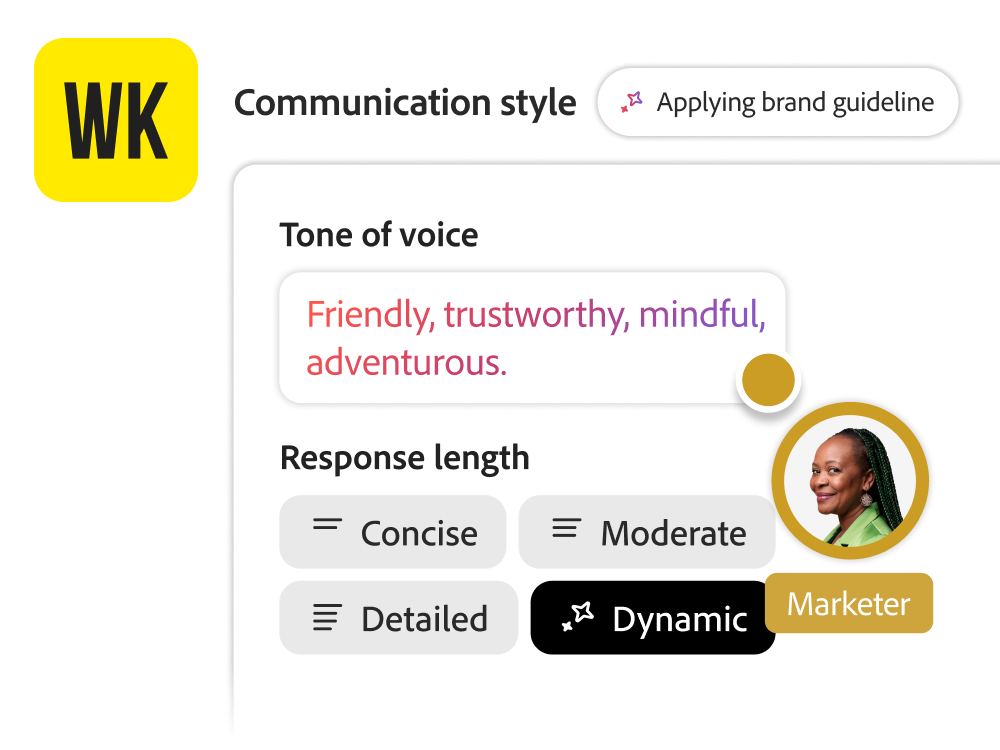
First is the grounding and the controls around it. The knowledge base stores your approved content, catalogs, and URLs, and the agent answers only from that. Adobe's Agent Composer is where your team sets the rules, brand voice and tone, response length, conversation scope, and what happens when the agent can't answer, a polite no, suggested questions, or escalation to a human.
Second is the live data. Old chatbots ran on static scripts. This runs on your catalog and, with the Commerce integration, your actual pricing and inventory. The answer isn't "check our shipping page." It's "in stock in your size at $179."
Lastly, the conversation itself works like a salesperson and not a search box. This one's handled by Adobe's Product Advisory Agent, which interprets intent and handles recommendations and comparisons. So a shopper types "I need a jacket for hiking in Iceland in October," and instead of forty results, the agent can come back with the two questions that matter. How warm do you run, and does it need to pack down small? Then it narrows the choices to three options. And it adapts as the conversation moves. Mention a budget halfway through and the recommendations re-rank. Say the trip moved to December and the answer changes. The shopper never has to learn your category tree.
One honest caveat. This is still a large language model application. Those controls reduce risk, they don't abolish it, and the brand owns every answer its agent gives. Adobe's guardrails are genuinely better than what came before. They are not a reason to skip testing.
Conversational shopping turns product discovery into first-party data
Nobody needs a concierge to buy socks. The value shows up in the hard journeys, the multi-constraint decisions where faceted search quietly fails. A snowboard where skill level, height, weight, and terrain all interact. A B2B buyer squinting at a spec sheet, trying to match a part. A sofa that has to fit a room and a doorway. These are the moments when shoppers give up, abandon the cart, or end up calling support. Guided conversations earn their keep right here.
That's the shopper side. The merchant side is the part almost nobody is talking about.
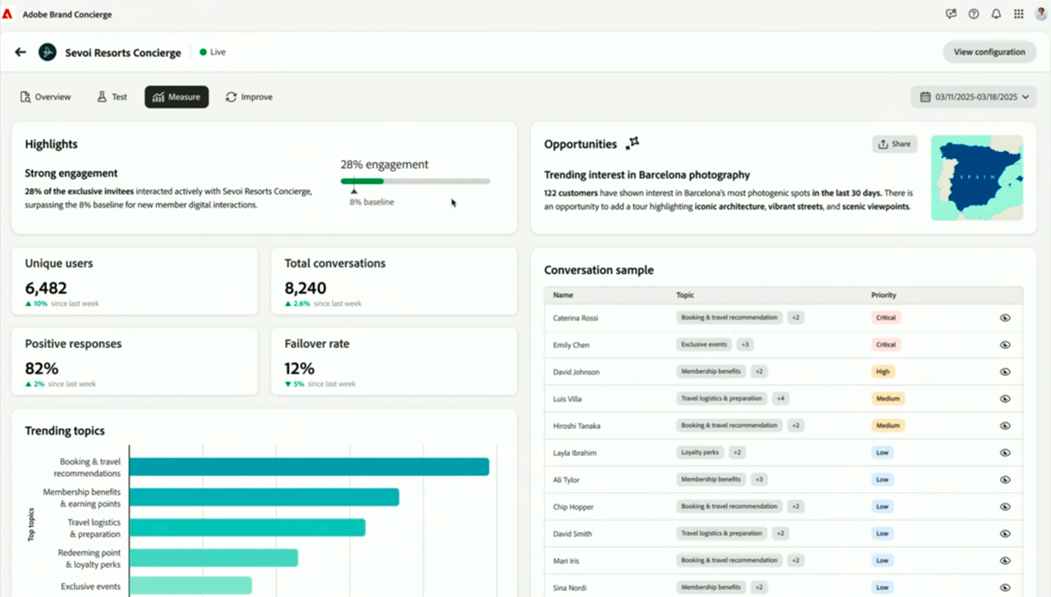
Every conversation your agent has writes intent, sentiment, and behavior signals back into the customer profile in Adobe Experience Platform. Think about what shoppers actually say to a concierge. Where they're going, what they own already, what they're worried about, what price made them hesitate. That's richer than any search-query report you've ever pulled. But when that same conversation happens inside ChatGPT or Gemini, you see none of it. The third-party agent keeps the intent data. Your storefront gets, at best, a click.
This compounds. The jacket chat that didn't lead to a sale revealed that a shopper plans to visit Iceland in December. That's a remarketing segment, a merchandising signal, and an email trigger you didn't have yesterday. Questions about products you don't stock are your customers writing your buying list for you. Objections that repeat across conversations are PDP copy waiting to be fixed.
What Adobe Commerce merchants can actually use today
Brand Concierge itself is generally available and has been since November 11, 2025. This includes content grounding, context-aware product recommendations from your catalog, and self-serve tuning. The tuning checks conversation performance and updates prompt configurations automatically. Adobe's own FAQ puts a basic implementation, existing catalog, standard FAQ content, default settings, at around three to five days of setup.
Conversation capture and profile enrichment are shipping now. Commerce features like in-chat checkout, cart management, post-purchase flows, and Real-Time CDP personalization are planned for Adobe's near-term roadmap. As of September 2026, they are not yet widely available. Plan for the capture value now and the transaction value as it lands.
On cost, Adobe licenses Brand Concierge per 1,000 conversations annually. A conversation is a session, counted once per calendar day it's active, and unused conversations don't roll over. There are no public dollar figures, so plan on sitting through a sales conversation for actual pricing.
A few structural limits matter before you commit. Product catalogs cap at 10,000 products per catalog. Content ingestion caps at 25,000 URLs. Deployment covers your websites and mobile apps. And conversation throughput is tied to your licensed volume. For most mid-market merchants none of these are blockers. If you run a very large catalog, ask about the cap before you get attached to the idea.
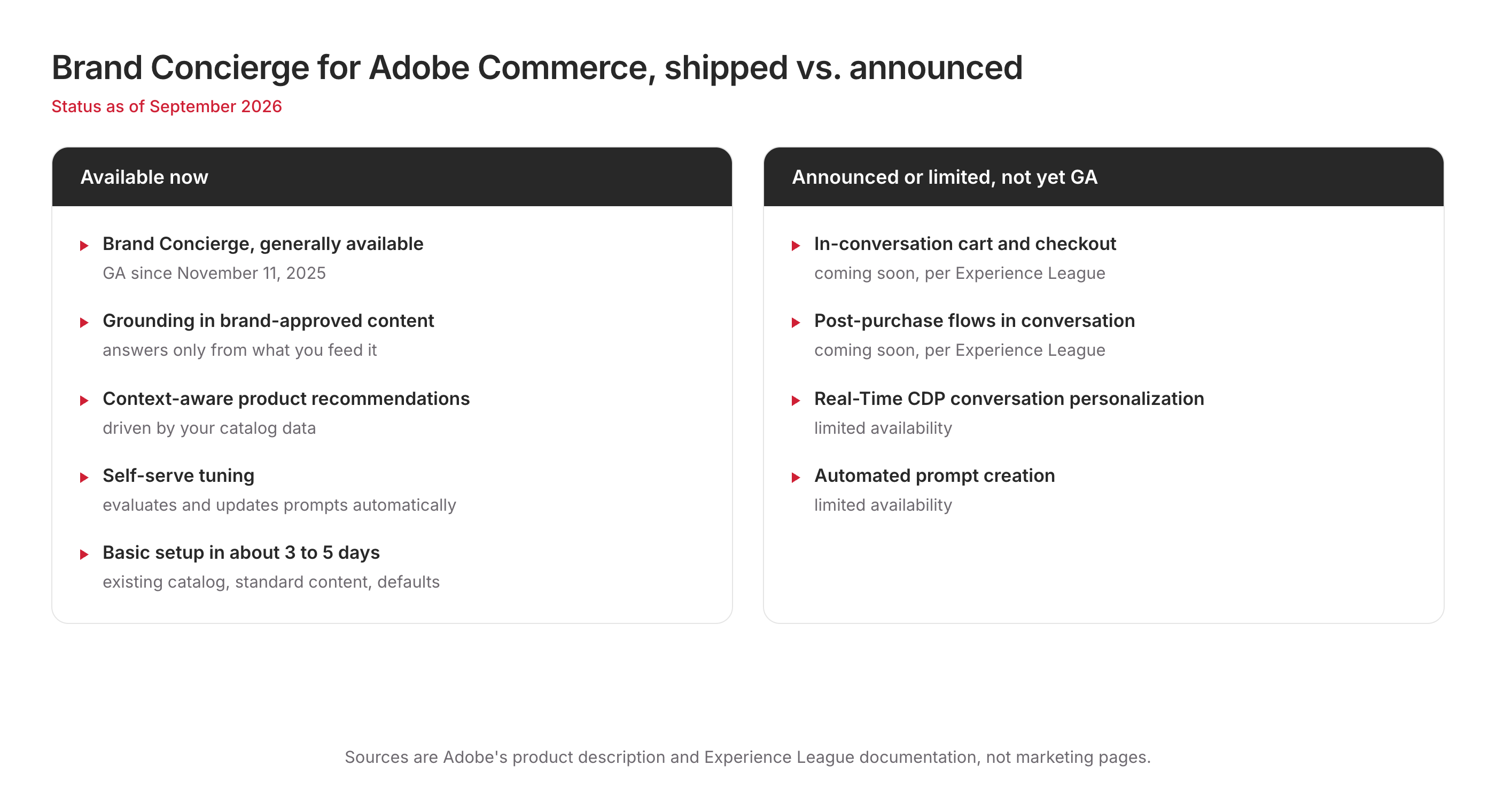
None of this is a reason to wait. Discovery and guided selling, the parts live today, are where most of the conversion value sits anyway. Scope your first phase around what ships now, and let checkout-in-chat land on Adobe's schedule.
There is a slightly different approach worth knowing about. At Summit in April, Adobe also released the Commerce MCP server, which lets developers build their own storefront agent against live catalog, cart, pricing, and checkout data. That path makes sense for a small group of merchants, the ones with the engineering to own an agent long-term and a conversational experience that is itself the product. For most Adobe Commerce merchants already on Adobe's stack, Brand Concierge is the faster and safer answer.
Either way, the prep work is the same. Structured product data, machine-readable policies, clean and current content, and an audit of what AI systems say about your brand. That work makes you better at Brand Concierge, better at any custom build, and better at the third-party agent channel we covered in part two. Start there and the decision gets easier.
See how AI reads your site
Before you pick a path, know your baseline. Our free scanner shows how your storefront looks to the AI systems shoppers now use.
Brand Concierge beyond ecommerce
Everything so far has been about shopping, but the product isn't limited to it. Because the agent grounds in whatever approved content you feed it, Adobe positions Brand Concierge for non-commerce sites too. A B2B manufacturer can use it for guided product selection against spec sheets. A content-heavy or CMS-driven site can use it as site guidance, answering questions from documentation and resources instead of making visitors hunt through navigation. And service businesses can point conversations at lead capture and meeting booking rather than a cart.
The Adobe Commerce integration is what this post is about, because live catalog, pricing, and inventory grounding is where the shopping experience gets real. But if your site exists to generate pipeline instead of purchases, everything in this post about owning the conversation still applies, data loop included.
Frequently asked questions
Does Adobe Commerce have an AI shopping assistant?
Yes. Adobe Brand Concierge lets Adobe Commerce merchants run an AI shopping assistant on their own storefront, grounded in brand-approved content and connected to live catalog, pricing, and inventory through a direct integration. It has been generally available since November 11, 2025.
How much does Adobe Brand Concierge cost?
Adobe licenses it per 1,000 conversations annually. A conversation is a session with a customer, counted once per calendar day, and unused conversations don't roll over. Adobe hasn't published dollar figures, so actual pricing comes through a sales conversation.
What is the difference between Brand Concierge and UCP?
They're the two halves of agentic commerce. UCP is a protocol that lets third-party AI agents like Gemini shop your store from the outside, so your products can be found and bought inside other companies' assistants. Brand Concierge is your own agent on your own storefront. UCP gets you distribution in channels you don't control. Brand Concierge gets you the conversation, the experience, and the first-party data.
Is Brand Concierge a chatbot?
It's a conversational interface, but it doesn't work like the chatbots most merchants remember. Those ran on scripted decision trees with no connection to product data. Brand Concierge uses only your approved content, suggests items from your active catalog, and asks clarifying questions instead of waiting for the perfect ones. The honest difference is grounding, not the chat window.
Agentic commerce is two decisions now. Whether your products should be findable inside third-party assistants is a protocol question, and part two covers it. Whether the conversation on your own storefront should still be a search box is the one this post leaves you with, and it's live right now for every Adobe Commerce merchant. And fittingly, the best way to work through it isn't a search box either. Continue the conversation with our Adobe Commerce team.
Stay informed, sign up for our newsletter.