Adobe Summit 2026: The Year of Orchestration (A Northern Recap)
For every passing year in the desert, one constant stays true: Adobe Summit gets a little bigger. This year had its largest ever of 14,000 attendees in Vegas, and a final Summit for CEO Shantanu Narayen after 18 years at the helm of the company. It was a memorable one. If we had to pick one word that defined the week, it would be orchestration. Content, data, agents, journeys, and the whole customer experience. Adobe wasn't just talking about it. They were betting the platform on it.
We had 15 Northerners on the ground, along with four of our partners from Beringer Capital. A VIP breakfast, a Content Supply Chain lunch and learn, hockey jerseys at Booth #2648, a Golden Knights game with clients (all at-capacity and an absolute blast!), and four days of sessions (if you include the AEM Guides Conference our CEO Mark Kelley participated in) and countless hallway conversations with familiar faces and new ones, too.
Here's how it all went down.
The Announcements That Mattered Most
In typical Adobe fashion, a lot of announcements and product news brought the buzz to Summit. The theme connecting everything was clear from the get-go: CX is getting smarter, more connected, and more creative. AI is what ties it all together.
CX Enterprise and CX Enterprise Coworker
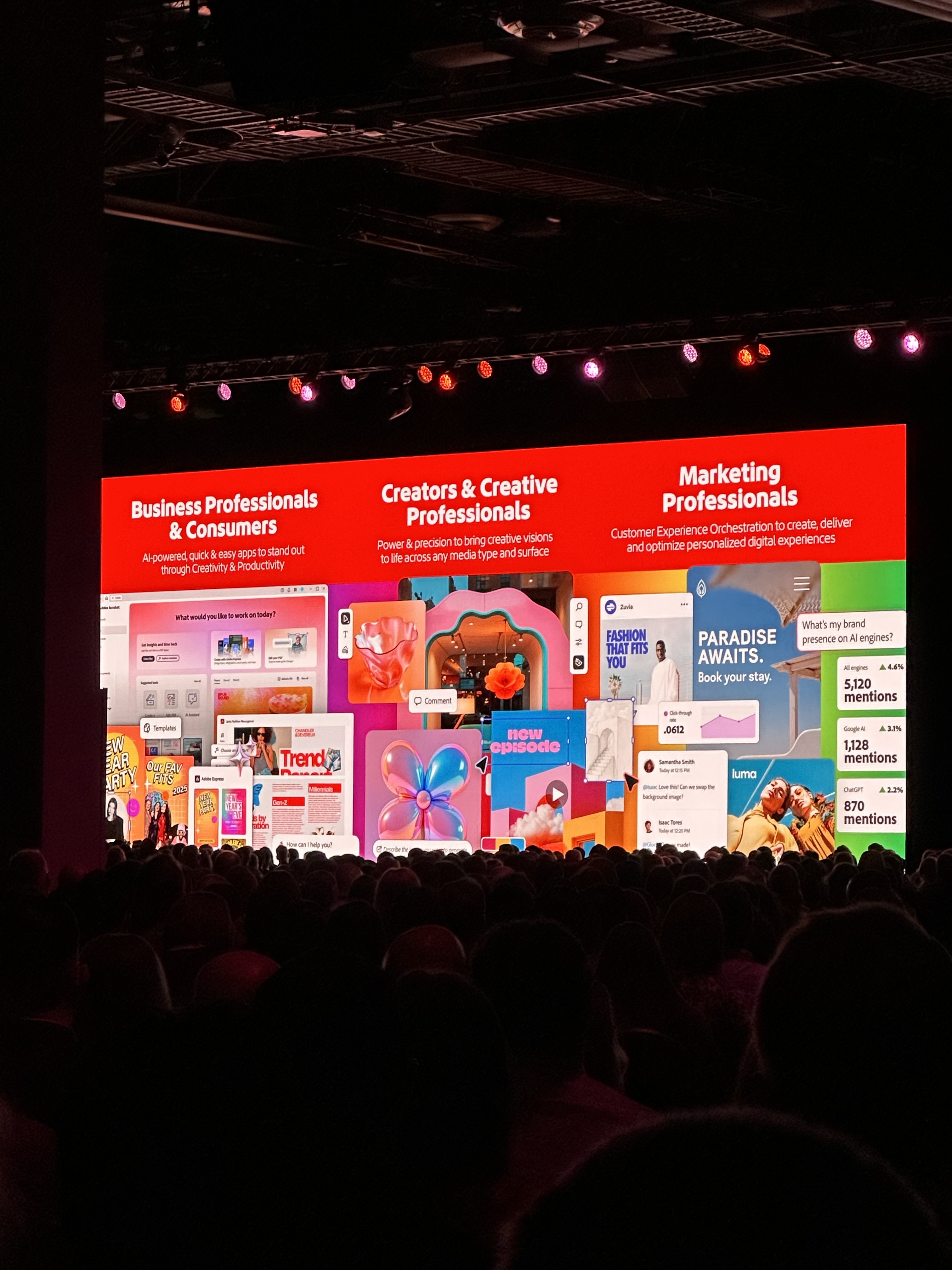
The big headline was Adobe CX Enterprise, a new agentic system that reorganizes the Adobe stack (AEP, RT-CDP, CJA, AJO, AEM, GenStudio, and Workfront) under one umbrella designed for AI-first orchestration. What changes is how those systems talk to each other and where humans sit in the loop. In practice, a campaign that used to require five meetings, three handoff documents, and a week of back-and-forth between teams can now move through the stack with humans approving the key decisions instead of moving the work along between them.
The centerpiece is CX Enterprise Coworker, an always-on, goal-oriented teammate that coordinates agents across Adobe products, enterprise systems, and external data through Model Context Protocol. The Day 2 demo with Ulta Beauty was the moment that landed for us. A beauty influencer goes viral overnight. While the marketing team in the US sleeps, Coworker detects the trend through a custom social media agent, identifies relevant audiences in Real-Time CDP, drafts creative with Firefly Creative Production, simulates outcomes, routes approval to the UK team (since they're awake), and launches across email, push, and paid social before anyone in North America sees their alarm clock.
Is every organization ready for that today? No. But the pieces are shipping fast.
By synthesizing intelligence from across Adobe applications, enterprise systems, and leading AI platforms, we are closing the gap between insight and action.
— Anjul Bhambhri, SVP of Customer Experience Orchestration Engineering, Adobe
Adobe Brand Intelligence
This was another major head-turner. Adobe Brand Intelligence is a continuously learning system built to keep content feeling on-brand even at scale. The pitch goes something like this: most AI brand checkers only catch the obvious stuff (the logo, colors, correct fonts, etc.), which gives teams a false sense of security. The harder part is what Adobe calls the "uncodified majority", the judgment calls, the institutional gut feel, and the reason a Creative Director kills an asset that technically follows every rule but just doesn't feel right.
So instead of relying only on a brand bible, Brand Intelligence trains itself on real review history. One of the early customers had 800,000 annotations sitting in Workfront Proof, none of which were written down anywhere as rules. Now they are. There are three skills at launch: Validate checks every asset with auto-fix, Instruct to Assemble pulls pre-approved elements from the DAM and puts them together across segments and geographies, and Predict runs creative past a synthetic audience before you ever hit publish.
For teams pushing out hundreds of assets a day, the bottleneck stops being production and starts being review. This is built for that.
AEM as an Agentic CMS
Adobe reframed AEM from a traditional CMS to an agentic platform. During the Day 2 keynote, we were presented with a demo: a full landing page built in minutes inside Experience Hub, with regional variants, generative content that personalizes per visitor in real time (not pre-built segments), and a new Brand Concierge conversational layer connected to Adobe Commerce and customer profiles. The argument was that every website should be conversational, whether you're human or an AI agent.
Brand Visibility for the Agentic Web
A new solution brings together AEM, LLM Optimizer, and Adobe Brand Concierge so brands stay discoverable for both humans and AI agents. LLM Optimizer already has over 600 enterprise customers. W.K. Kellogg saw a 350% lift in AI citations. Adobe also pointed to the proposed Semrush acquisition as complementary to the AI discovery story, and announced expanded partnerships with the major LLM providers.
Fun Fact: Did you know? We've considered ourselves experts in Semrush long before this acquisition. It's been Northern's platform of choice for our SEO team for many years. Read more about some of our favourite features here.
Nvidia and 3D Digital Twins
For automotive, CPG, luxury, and anywhere product fidelity is non-negotiable, Adobe and Nvidia announced a joint 3D digital twin solution. High-fidelity product representations, dropped into new scenes, with photo-realistic lighting and shadow, scaled into infinite variants. For brands that would never trust a generative model with their physical products, this changes the math on production.
AI Maturity Index
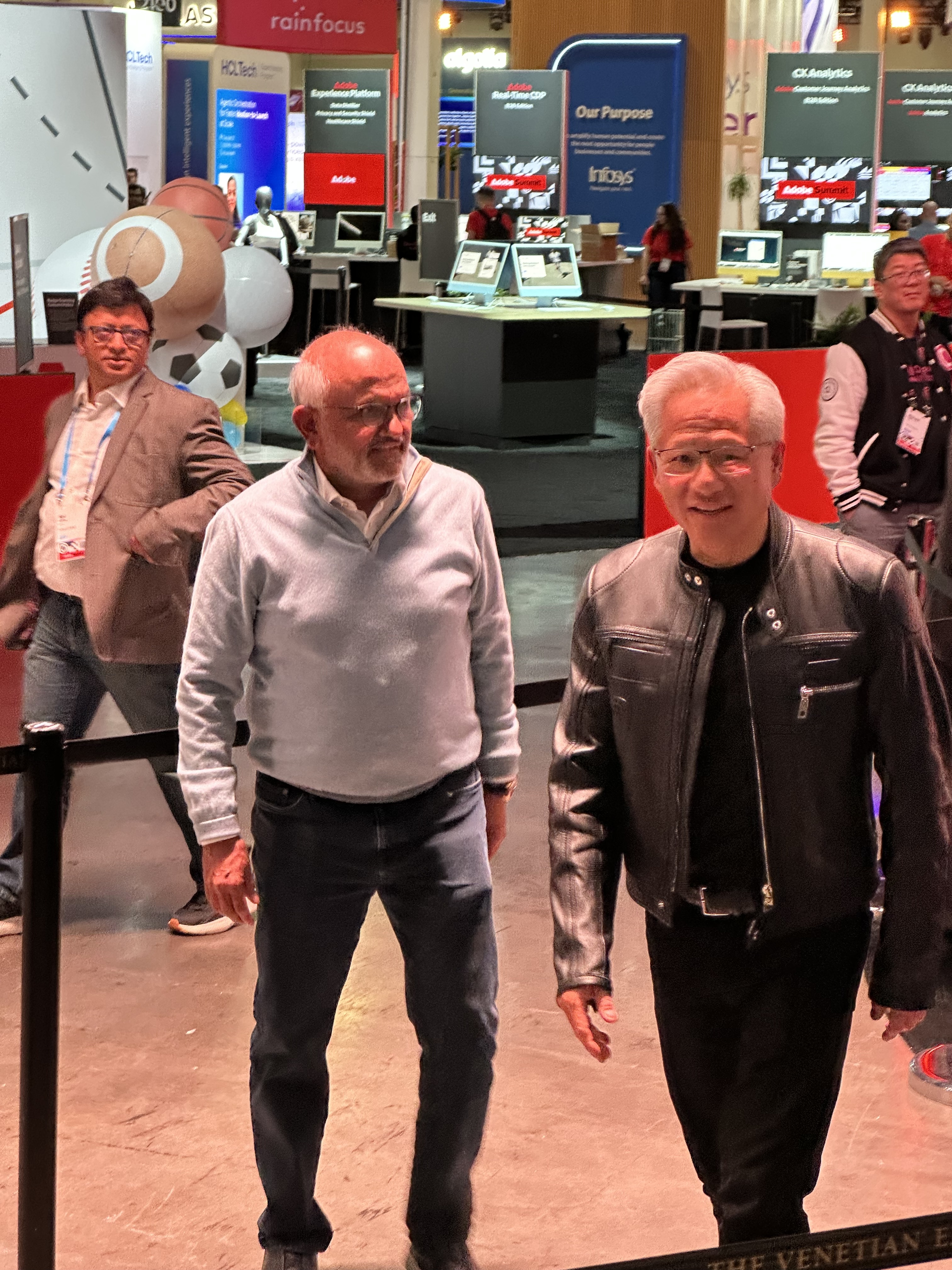
Adobe also introduced an AI Maturity Index, a CMO-facing diagnostic for benchmarking where you sit on the AI maturity curve. If you're trying to figure out where to start (and most organizations we talk to are), it's a useful first read.
Sneaks
Seven prototypes made it onto the stage this year, narrowed down from over 500 internal submissions. Adobe noted that AI-powered ideation tripled their submissions from last year, which is its own quiet proof point for what AI is doing inside organizations.
The audience winner was Project Face-Off, which simulates A/B tests using AI-generated personas before anything goes live. It returns results in seconds rather than weeks, and during the demo, the team built "tournament mode" live on stage using Claude Code. Other standouts: Project Page Turner (websites that rebuild themselves per visitor intent in under a second, no preset segments needed) and Project Asset Amplify (one campaign folder becomes a full cross-channel marketing ecosystem in minutes, including a children's storybook version of the same product).
All seven are playable on a microsite if you want to try them yourself. And worth knowing: two of last year's Sneaks shipped to production within a month of Summit ending. Adobe is moving fast on this stuff.
Three Sessions That Stood Out
Between booth shifts and the events we hosted, we spread our team across the session catalog. Out of everything they attended, three sessions kept coming up afterward.
How to Orchestrate AI-Powered Workflows in Your Content Supply Chain (S403)
Ravi Dukuru ran a poll from stage that stuck with us. "How many of you are deploying agentic workflows within your enterprise?" Maybe 10 to 20% of the room raised their hand. When he asked how many had more than 10% of their workflows running agentic, the hands almost all dropped.
That's the gap. Most enterprises are using AI assistants. Almost none have agents actually participating in real team workflows yet. Ravi shared a quote from one of his customer execs that we keep thinking about:
Last year it was all about, why are you not doing anything with agentic? And this year it's entirely about, what the hell are you doing with 1,000 agents? Where are you orchestrating those? How are you getting the value?
Adobe's answer to that is human-led, agent-accelerated. Bring agents into workflows you already run, one at a time, instead of bolting on a brand new stack. Simple framing, but it's the right one.
Making AI Stick: Scaling AI Adoption That Drives Lasting Impact (S818)
This is the one our team kept bringing up at dinner. Adobe's Tony Van Winkle ran a conversation with Vanguard's Jennifer Mannery and Adobe's own Marissa Dekai, and it was the most honest panel we sat in on all week.
The data going in was sobering. Half of organizations feel change is happening faster than employees can keep up with it. 58% think they'll be left behind. Only 45% have a real upskilling plan. But the headline takeaway came from Jennifer:
As a technologist, it will sound crazy that I say this, but this is not about the technology. The majority of the time we've spent here has been about operating model changes and culture and learning.
— Jennifer Mannery, Vanguard
Vanguard didn't optimize their content supply chain. They rebuilt it. Compliance review cycles dropped over 30%, email cycle times dropped 57%, and AI-driven next best actions lifted client click-through by 40%. The five skills the panel pointed to as the foundation for all of it: creative thinking, critical thinking, AI literacy, resilience, and responsible use. Every one of them human.
AI and the Future of Adobe Workfront (S801)
This one was packed. Around 700 people in the room. The Workfront team organized their whole roadmap around three things: ideate, accelerate, and optimize.
A few highlights worth flagging:
- Project Catalyze is an AI-driven canvas for campaign strategy that synthesizes documents, audience data, and historical performance into a structured brief. It exports straight into Workfront Planning. Included with every Planning seat. Q3 2026.
- AI Collaborators lets you assign tasks to agents (Adobe's or third-party) inside projects you already run, with a human review baked into every step.
- Workflow Optimization Agent + MCP server access was the announcement that mattered most for us. If your team has standardized on Claude, Copilot, or Gemini, you can interact with Workfront from there. Available in June.
The thing that stuck with us, though, was a story the team told about themselves. They specced a backlog feature in the morning, had AI build it that afternoon, validated it with engineering, and shipped it. When customer feedback rolled in, they revised the spec and shipped a fix the same day. Their message: backlog items are about to start moving faster. We'll believe it when we see it on our own implementations, but the demo was convincing.
How We Showed Up
Fifteen people. Leadership, sales, partnerships, data and analytics, marketing, and delivery. We've sent teams to Summit before, but never like this.
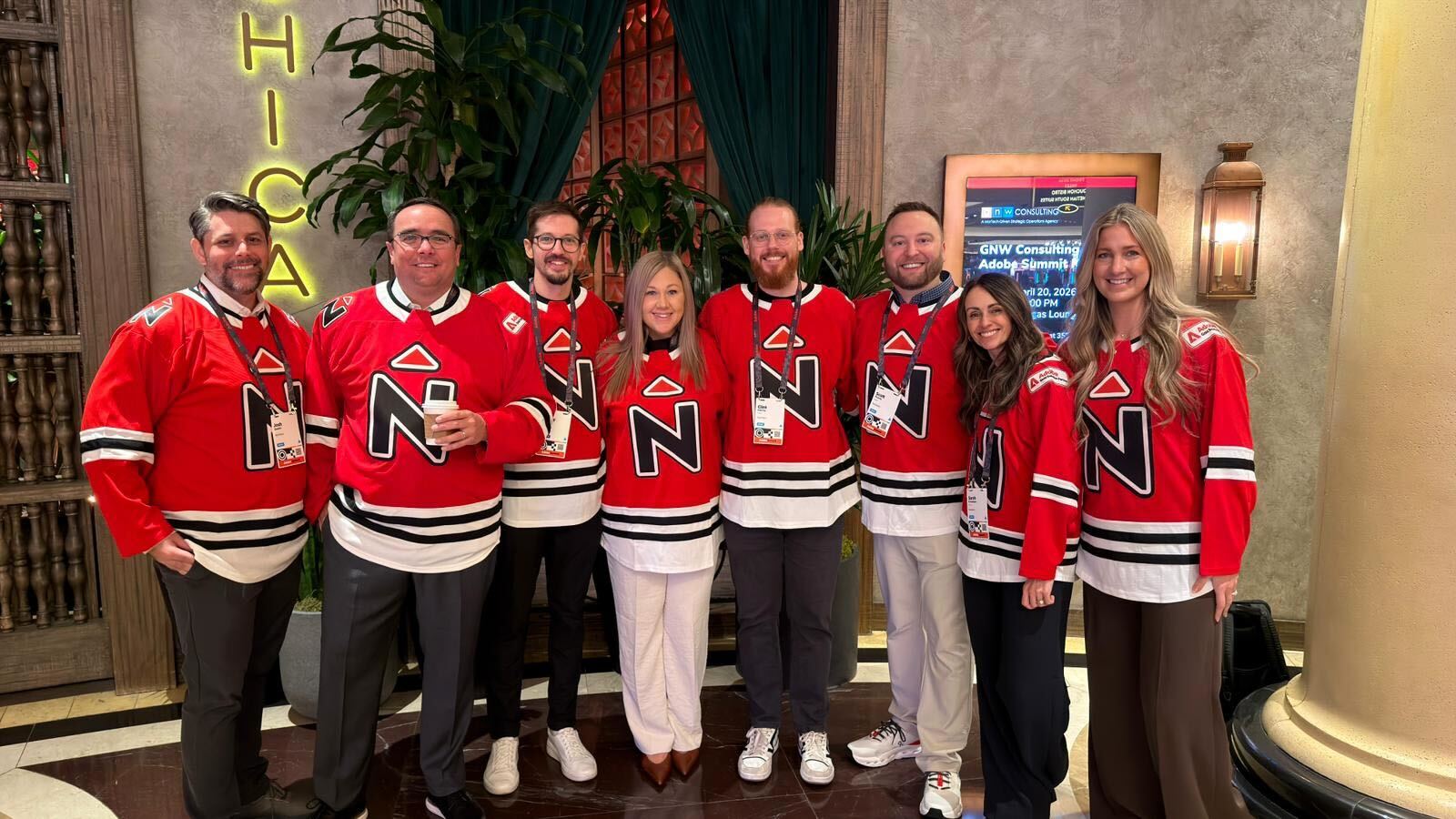
Our week started Monday morning at CHICA with our VIP Networking Breakfast, with the format being loose, on purpose. What we got, along with the food and coffee, was two hours of honest conversation with marketing and technology leaders, about where they're at with their Adobe tech stack. The line we kept hearing, in some shape or form? "We know we need to move faster with AI, but we don't know where to start."
Tuesday was Northern's Content Supply Chain Lunch & Learn at SUGARCANE, invite-only, smaller group. This one went deeper into the technicals of, you guessed it, Content Supply Chain. As always, this event was a hit. Some of the best conversations we had all week happened over the small plates.
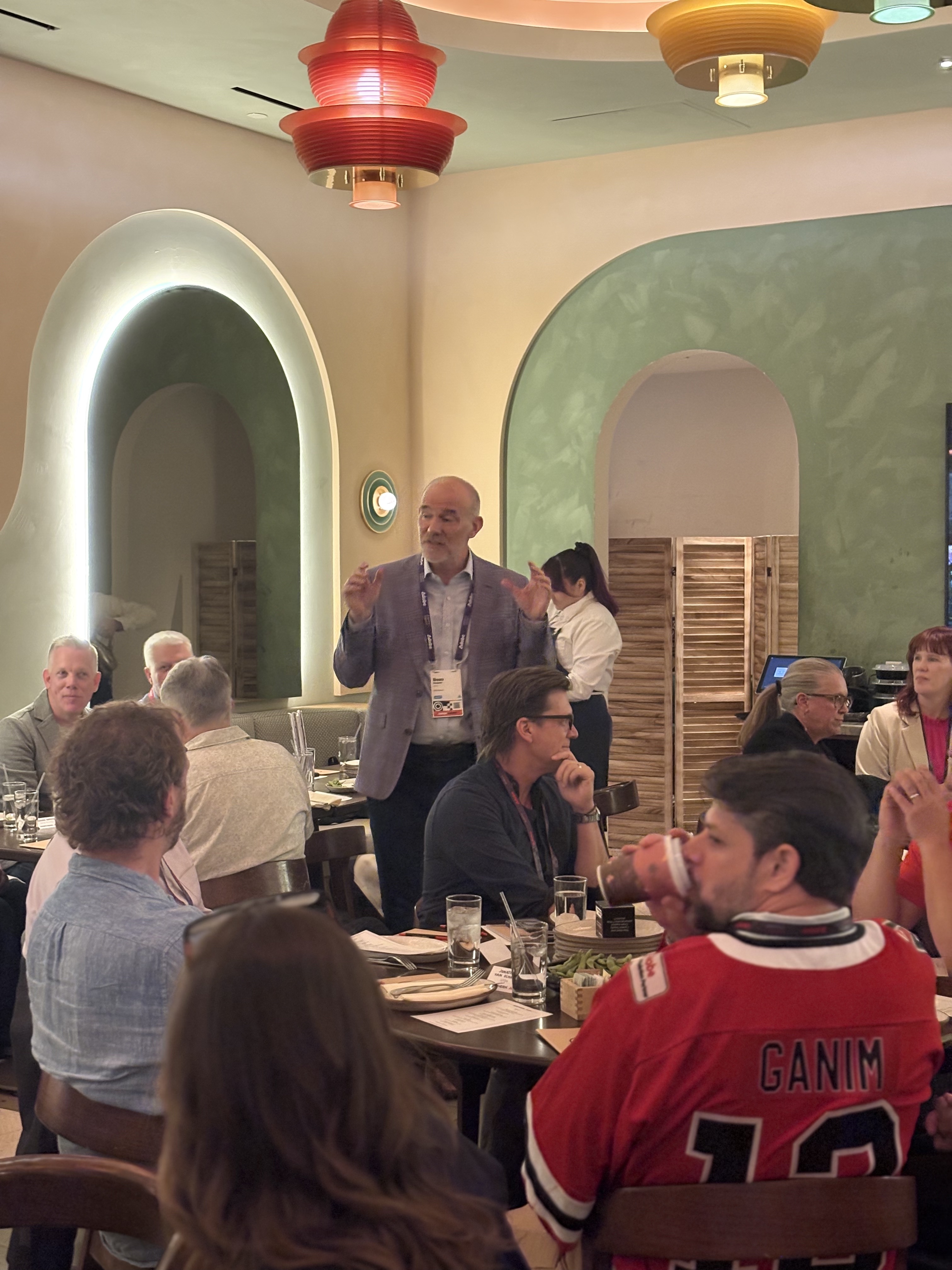
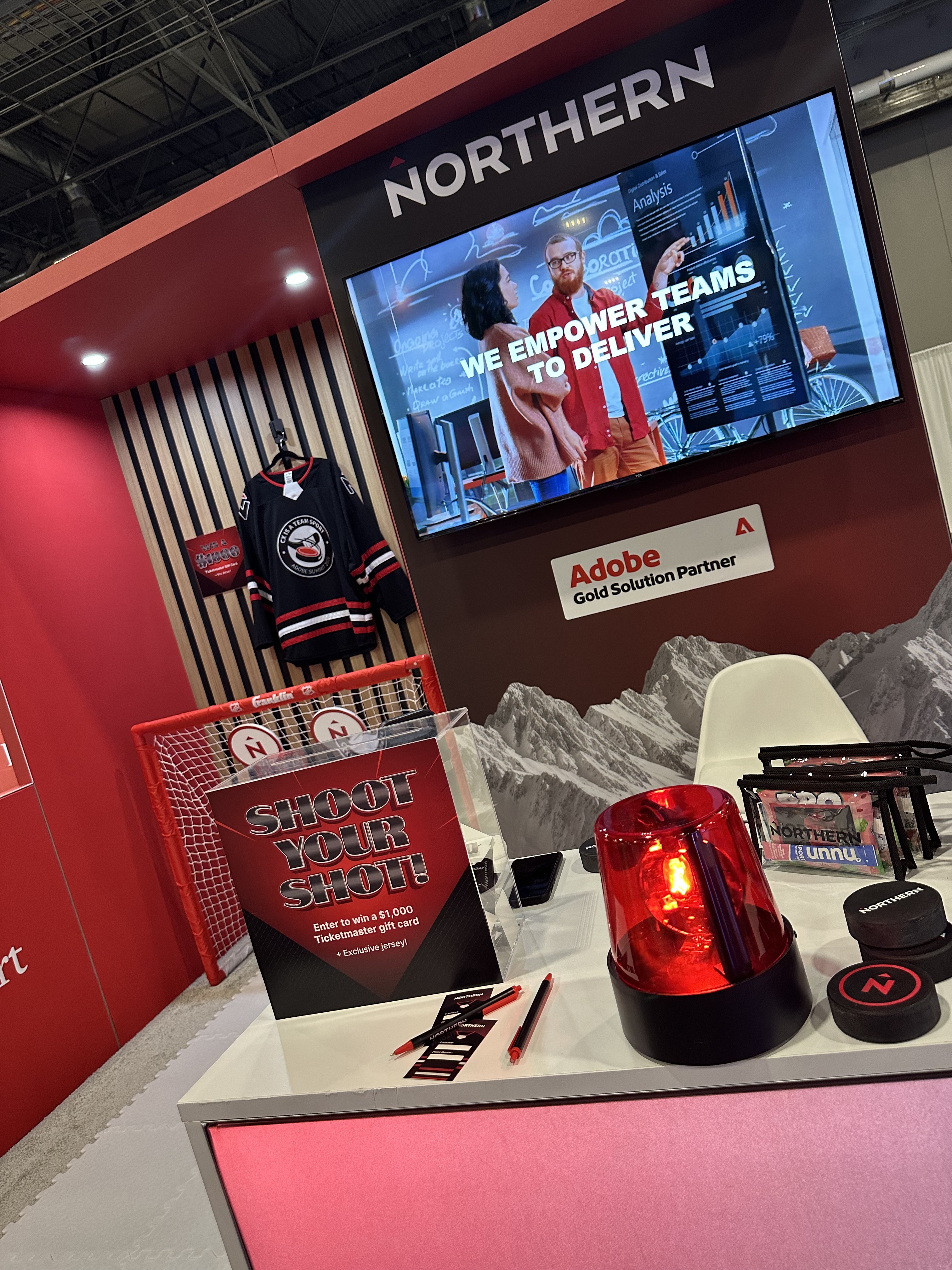
Then there was the booth. #2648, hockey-themed because we're headquartered in Canada and we'd be doing ourselves a disservice not to. Slapshot challenge, custom jerseys, our beloved Overtime Survival Kits, and a $1,000 Ticketmaster giveaway. The thing we kept noticing wasn't the slapshot or the swag, though. It was how often someone walked up to the booth and said, before we'd said anything, "Oh, Northern. Yeah, I know you guys."
We also took a group out to a Golden Knights game midweek. Hockey, good seats, no badges. A great way to step away from the Summit floor and just enjoy the company.
Long days. And totally worth it.
The Bottom Line
Nobody is starting over. CX Enterprise is an architectural reframing, not a rip-and-replace. Your existing AEP, RT-CDP, CJA, and AJO investments carry forward. The harder question is how you plan, govern, and operate on top of it now.
Data is still the floor. Three quarters of organizations still name data quality as the primary barrier to AI implementation. The agentic stuff Adobe announced won't deliver if the underlying data isn't there.
Governance didn't get the airtime it deserved. Adobe has led on commercially safe AI since Firefly, but the risk of off-brand, non-compliant, or IP-infringing AI output is growing fast at the content scale Adobe is now enabling. Tools are getting more powerful. Guardrails need to keep pace.
Roles are changing shape, not disappearing. AI is taking over production. Humans are moving up into strategy, governance, and judgment. Requesters are becoming owners. Operators are becoming decision makers. BDRs are becoming content creators.
The timeline is tighter than most realize. Workflow Optimization Agent launches in June. AI Collaborators ships Q3. Brand Intelligence is GA right now. Two of last year's Sneaks shipped within a month. The window isn't twelve months. It's the next two quarters.
Watch Adobe Summit 2026 Unpacked, on demand
Our team breaks down what Adobe announced and what it means for your roadmap over the next two quarters.
Keep the Conversation Going
If you've been reading this thinking about your own Adobe stack, your own team, your own data, you're not the only one. The challenges, the gaps, and the updates you've been putting off, we hear about them constantly. We had those exact conversations all week at Summit, and we're still having them now that we're back. If you want to figure out what any of this means for you, let's talk.
Stay informed, sign up for our newsletter.