From AI to Accessibility: Reflections from the Higher Education Conference Circuit

Author
Jay Ménard
One of the great things about travel is the understanding that, while we may come from different backgrounds and have different socio-cultural beliefs, at the core, we’re more alike than different.
In our experience, that’s no different when we hit the road for the conference circuit – especially in the higher education sector. It doesn’t matter if you’re a massive Division 1 school, a small community college, or find yourself somewhere in between, when it comes to communications and web content, there are some core commonalities that unite us all.
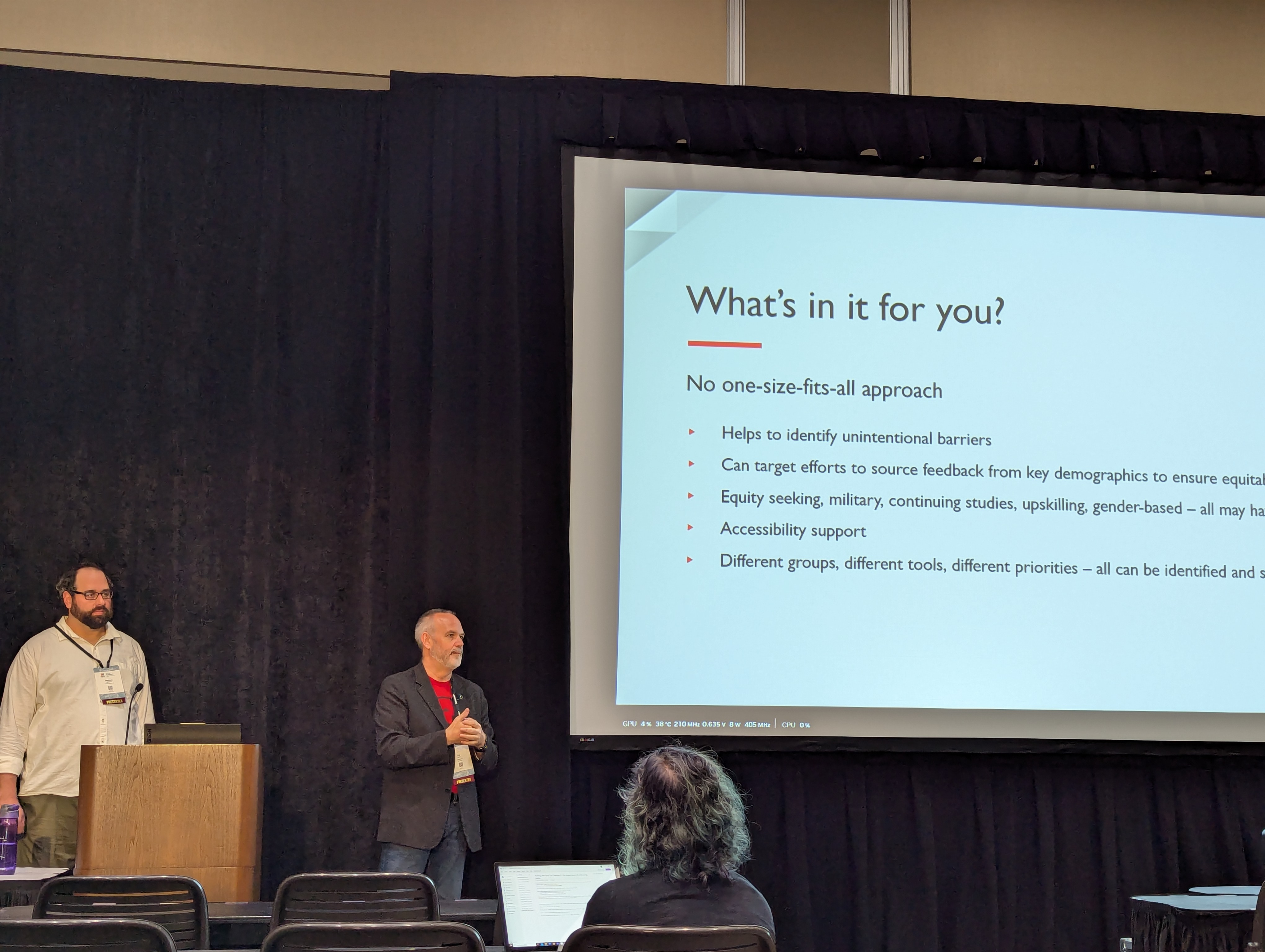
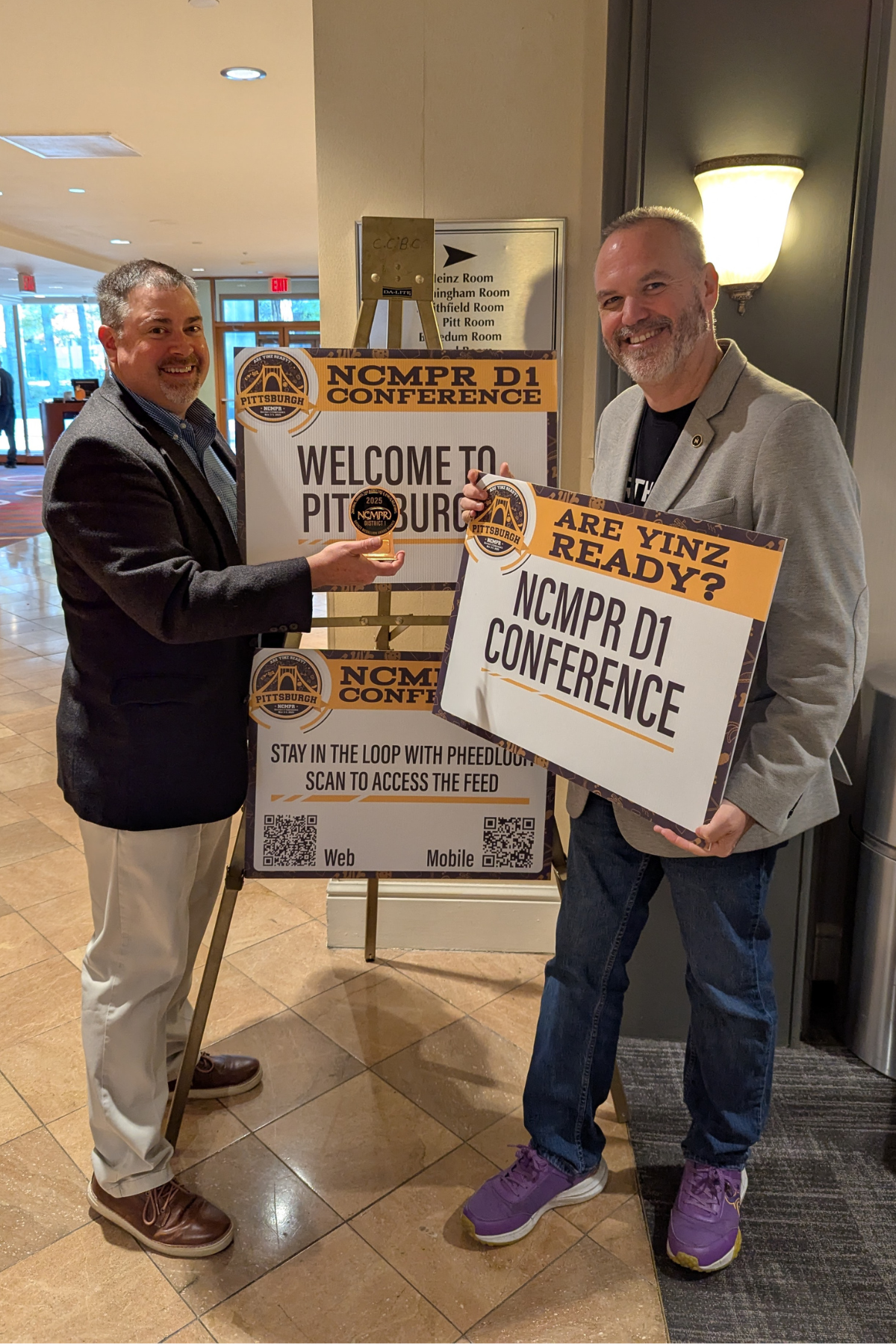
Northern’s been on the road a bit over the past few months, having the honour of co-presenting with two of our valued partners – Canisius University and SUNY Niagara at Digital Collegium and NCMPR, respectively. While the focus of both of our presentations was on the value of comprehensive user experience research on not just website development, but overall organizational change and marketing strategies, we got to mix and mingle with others at the events. Sharing knowledge and reinforcing trends that we’ve experienced.
So what’s the higher ed world facing right now?
Wrestling with AI
This may be a bit zeitgeisty at the moment, but it seems like every second track is about AI. It runs the gamut from fully embracing AI to fears of the impact it’ll have on quality content and human employment.
It’s a topic with which we’re still wrestling. If anyone tells you they have all the answers, well, they’re just lying. We addressed this issue with our “AI & Your Content Strategy” webinar (https://www.northern.co/webinars/ai-and-your-content-strategy), but obviously this was a matter of grave concern for our attendees.
Why? Well, most of the attendees were marketers or content creators. So they have a vested interest in the topic – and are often getting pressure to use AI from people who may not appreciate the risks.
At Digital Collegium, there were two tracks that were particularly resonant. Erin Callihan, the AVP Strategic Marketing and Campaign Communications for New York University presented “10 GenAI Tools and Tricks Every Higher Ed Pro Should Be Using,” which looked at practical AI solutions you can use today, complete with demos. Tina Miller, the Executive Director, Creative & Communications at Arizona State University, discussed AI in action that looked at real-world applications of AI in marketing with a focus on higher ed success stories.
The Role of a Higher Education Website
This is one we deal with all the time. We know what the answer is nine times out of 10 – and that’s recruitment of prospective students. But we often deal with legacy mindsets that feel the website has to be an equal presentation for all audiences, regardless of what the data says.
Throughout the sessions, we heard variations of the phrase “our website is a jumbled mess of too much content with no focus.” And that largely is due to the fact that there’s no organizational strategy for the website. Worse, there’s little to no understanding of who is using the website, for what purposes, and why.
It’s a hard message to tell people within the organization that what’s important to “you” is not important to a site’s primary audience. That doesn’t mean it’s not important – full stop. But rather, the website is but one tool in a much larger toolbox. The days of people showing up on a homepage and browsing are long gone – we’d argue over a decade ago. Yet, that mindset exists. For years, search has been the driving force – with a vast majority of users bypassing the internally valued homepage altogether. And now, with GenAI, your site may not be a destination at all, but rather a repository from which AI summaries are drawing information.
That’s a huge shift in philosophy, especially for those decentralized sites. And it’s one that can only be countered with objective, data-driven solutions. The easiest way to counter subjectivity is with data and facts, but too often organizations don’t invest in that research because they feel they “know” their customers.
That ignores experiential and operational biases. And, most importantly, that ignores the simple fact that no one knows the customer better than the customer themselves.
Equally as important is the change management and communications components. Meaghan Million, the Director of Digital Strategy at University of Arkansas at Little Rock, spoke at Digital Collegium about the importance of a communications plan throughout the process in her presentation “How Intentional Campus Communication Resulted in a Successful Web Design.” It’s a sentiment that was echoed in both of our presentations, wherein our partners at SUNY Niagara and Canisius both stated that giving opportunities for stakeholders to stay in the loop contributed to project understanding, adoption, and, ultimately, success.
Content Creation & Curation
Many higher education websites are decentralized content farms with little to no co-ordination or governance. Faculties and departments are adamant about the need to control their own content and promote internally prioritized messaging, without a consideration of the greater whole.
Without understanding user motivations or, worse, advocating on behalf of end users and ignoring implicit biases, it’s easy to go off the rails when creating content. And communications types struggle to argue against subjective views held by long-tenured employees, faculty, and administration that are grounded in personal belief (and coloured by organizational mandates), as opposed to facts and data.
The risks? Misalignment to brand voice, duplication of content, erroneous content, and, most importantly, misalignment to the needs of a primary audience. Which leads to the next point about accessibility. A great session we attended at NCMPR that spoke to the importance of content creation was from Jill Bennett, the Director of Marketing and Public Relations at Anne Arundel Community College. The session titled “Unleashing Your Creative Power: Strategies for Everyday Success,” explored the importance of embracing a creative mindset for everything from storytelling, strategy, and leadership – especially in today’s AI-influenced world.
Accessibility
If AI was issue 1, accessibility was definitely 1A. As both conferences were south of the 49th, colleges were dealing with the impending arrival of the United States Title II deadline, as part of the Americans with Disabilities Act. That deadlines that public entities serving 50,000 or more people must be WCAG 2.1 AA compliant by April 2026. And those under that threshold must comply by the following year.
What does that mean? All public-facing digital services have to pass accessibility thresholds, and that includes online documents, forms, multimedia presentations, and many other content areas.
Beth Noël, Director, Middlesex Community College, presented a great intro to overall accessibility with her “Accessibility is Not a Checklist: A Guide to Human-Centered Web Design.” And for many in the audience, it was an eye-opening experience.
It’s an issue we’ve dealt with in Ontario since back in 2013/2014. And, much like we saw here, there are those who are trying to use scare tactics to gain business.
In our experience, accessibility mandates are designed to be collaborative, not punitive. As long as you’re showing good faith in your efforts, there’s an opportunity to work within the legislation to get better. But it’s a daunting task. Higher education websites are filled with PDFs and non-compliant content. Things like colour contrast and captioning have been treated as afterthoughts. And now communicators are faced with thousands, if not tens of thousands, of webpages to manage.
But to paraphrase Lao Tzu, a journey of reconciling a thousand PDFs begins with a single step. Working with an experienced, honest vendor can help make the task less challenging. And communicating the importance of accessibility compliance – not just for ADA reasons, but for the wealth of benefits it brings to SEO, mobile development, and, now, GenAI adoption – is a great place to start.
Capacity
Attending the sessions, it was interesting to note that the “wideness of the eyes” was inversely proportionate to the number of staff members in the communications office. Sure, if colleges had multiple communications staff, this would be easy, but the reality is that a lot of these comms shops are one or two-person operations. And they’re constantly under the pressure to do more with less.
Willingness to comply or embrace best practices was never an issue – but capacity sure is. And that’s where these attendees were looking for the most help. Having a partner upon whom you can rely, trust, and even commiserate is an invaluable experience. If there was a reassuring message Northern was able to deliver, it was that you’re not alone. We’ve been there, we’ve walked that path with dozens of clients, and we know what you’re going through. In fact, it’s often comforting to know that the challenges you face are not unique to you – and they truly aren’t.
The More Things Change…
Sometimes conferences bring the greatest value not in teaching you something new, but rather reinforcing the path you’ve been on.
Both conferences showcased the value of bringing the community together – both schools and vendors – and giving a forum where stories can be shared, relationships can be built, and ideas – and support – can flow freely. We were delighted to have been invited to be a part of that experience and look forward to continuing conversations with our newly created connections long after the conference badges are tucked away.

For our final takeaway, it’s apparent that higher education institutions are navigating a period of significant change that includes AI and accessibility to content governance and capacity constraints. While the challenges are very real, so too is the opportunity to approach them thoughtfully, collaboratively, and with the right mix of strategy, research, and empathy.
At Northern, we’ve had the privilege of walking alongside institutions as they make sense of their data complexity and build digital experiences that truly serve their audiences. If any of these challenges sound familiar, we’d love to continue the conversation. Whether you’re just starting to ask the hard questions or are deep into transformation, you don’t have to navigate it alone.
Stay informed, sign up for our newsletter.